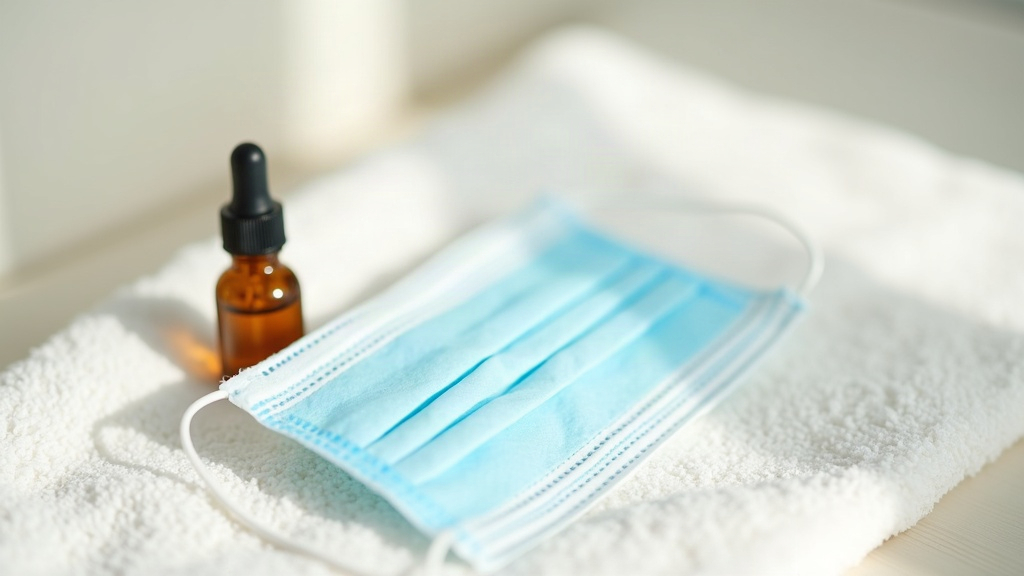
Maskne is the informal name for breakouts and irritation that show up where a mask sits on the face — usually the cheeks, chin, jawline and around the nose. It happens because fabric rubs the skin, breath and sweat get trapped underneath, and that warm, damp environment disrupts the skin’s normal balance.
What exactly is maskne?
Maskne isn’t a separate medical condition — it’s a nickname for a pattern of skin trouble linked to something covering the lower face for long stretches. It usually looks like small bumps, tender red spots, or patches of irritated skin exactly where a mask makes contact.
For some people it’s closer to acne — inflamed spots and clogged pores. For others it’s more like a rash or contact irritation, without the deeper clogged-pore element at all. The two can look similar from the outside, which is part of why it’s easy to mistreat one as the other.
Why does wearing a mask trigger breakouts?
A few things happen at once when fabric sits against skin for hours: warmth and moisture build up underneath, friction rubs against the surface repeatedly, and the skin’s own oil and sweat have nowhere to evaporate. That combination can clog pores and irritate the surface layer at the same time.
None of this is about the mask being unclean in a moral sense — it’s a physical environment problem, not a hygiene failing. A lot of people who never had breakouts before found their skin reacted simply because the conditions changed.
- Heat and humidity: trapped breath raises local temperature and moisture, which can make pores more prone to blocking.
- Friction: repeated rubbing against the same patch of skin, especially over hours, can irritate the surface and sometimes contribute to small clogged bumps known as a closed comedone.
- Occlusion: fabric traps oil, sweat and product against the skin instead of letting it sit on the surface normally.
- Shifted surface bacteria: the change in moisture and airflow can alter the balance of what’s living on the skin’s surface, which may play a role for some people.
Which areas of the face does maskne usually affect?
Maskne typically follows the shape of the mask itself — cheeks, chin, jawline, and sometimes the bridge of the nose or behind the ears where straps sit. That’s a useful clue, because acne linked to other causes tends to show up in different, more consistent patterns.
There’s more general background on why breakouts cluster in particular zones of the face in general terms, over in the piece on why acne appears on some face areas and not others. Mask-related breakouts are a good example of how the external environment, not just internal biology, can decide exactly where trouble shows up.
Is maskne different from regular acne?
Not in a strict medical sense — the underlying process (blocked pores, inflammation, sometimes bacteria) overlaps heavily with ordinary acne. The main difference is the trigger and the location: it’s tied to friction and occlusion from fabric rather than hormones, genetics or oil production alone.
That distinction matters practically. If breakouts are new, sit exactly under where a mask contacts skin, and improve on days without one, mask-related triggers are a reasonable thing to consider. If spots are spreading well beyond that area, or were already present before regular mask-wearing started, other more general acne causes are worth thinking about instead — the Acne Basics hub is a good place to start untangling that.
What can make maskne worse?
A few common habits tend to add to the problem rather than solve it, often without anyone realising:
- Heavy makeup underneath a mask. Thick coverage adds another layer of occlusion on top of the fabric itself — there’s more detail on this in the piece on whether makeup always makes acne worse.
- Reusing the same cloth mask for days without washing it. Oil, sweat and skincare residue build up in the fabric and get reapplied to the same patch of skin each time.
- Overcorrecting with strong actives. Reaching for a harsher exfoliant or drying wash to “fight” the breakouts can strip the skin further and add irritation on top of friction.
- Skipping moisturiser out of worry it will clog pores. A compromised surface layer is often part of the problem, not a bystander — see whether acne-prone skin still needs moisturiser for a plain look at that trade-off.
What actually helps ease maskne day to day?
There’s no guaranteed fix, and results vary from person to person, but a few practical, low-risk adjustments tend to make the environment under a mask less irritating.
- Choosing breathable fabric and swapping to a clean mask regularly rather than reusing the same one for multiple days.
- Keeping the routine underneath simple — a gentle cleanser and a lightweight, non-comedogenic moisturiser rather than a thick layer of product sitting under fabric all day.
- Washing the face at a sensible frequency rather than over-washing in an attempt to “reset” irritated skin — the piece on how often acne-prone skin should be washed covers why more isn’t automatically better.
- Giving skin breaks from the mask where it’s safe and appropriate to do so.
- Introducing any new active one at a time, patch-testing first, since irritated skin under a mask is already under more stress than usual — see why introducing one product at a time matters.
None of this promises clear skin on any particular timeline. Skin under repeated friction and occlusion often takes a while to settle even once the trigger is reduced, and for some people the irritation resolves largely on its own once mask-wearing becomes less constant.
When is maskne worth seeing a doctor about?
If breakouts are painful, cystic, spreading beyond the mask area, leaving marks, or affecting how someone feels day to day, that’s a reasonable point to bring it to a doctor or dermatologist rather than keep experimenting alone. Seeking help early is a sensible step, not an overreaction.
A professional can also help tell apart irritation, a mild rash, and genuine acne — which matters because the right approach differs. For a general sense of where that line usually sits, the piece on when acne is worth seeing a doctor about is a useful starting point, and Treatments & Dermatology covers what a first appointment for stubborn skin issues typically involves.
In the meantime, understanding the skin’s outer layer — what’s called the skin barrier — helps explain why friction and trapped moisture cause so much trouble in the first place. That’s covered in plain terms in what the skin barrier is and why it matters.
Acne Cut publishes general information about skin, not medical advice. We are writers and researchers, not dermatologists, doctors or pharmacists. Acne varies enormously from person to person, and what suits one person’s skin can irritate another’s. If your acne is painful, scarring, getting worse, or affecting how you feel day to day, speak to a doctor or a dermatologist — that is a normal thing to do and it is what they are there for.