LED masks and light therapy can help calm mild acne and redness for some people, mostly by reducing inflammation and possibly slowing the bacteria linked to breakouts. The evidence is real but modest, changes tend to be gradual, and these devices are not a replacement for treatments a doctor would consider for more persistent or severe acne.
How Are LED Masks Supposed to Work?
LED (light-emitting diode) masks shine specific wavelengths of light — usually red, blue, or a combination — onto the skin. The theory is that different wavelengths do different jobs at a cellular level.
Blue light is thought to affect a bacteria called Cutibacterium acnes, which lives on everyone’s skin but is linked to inflamed breakouts. Some lab research suggests blue light can trigger a reaction inside these bacteria that may reduce their numbers. Red light is generally described as calming and is often associated with reducing redness and supporting the skin’s repair processes, rather than targeting bacteria directly.
None of this is the same as an active ingredient penetrating the skin. It is a physical stimulus, not a chemical one, which is part of why the effects tend to be gentler and slower than something like a topical treatment discussed on the ingredients explained hub.
Does the Evidence Actually Back This Up?
There is some clinical research supporting light therapy for mild-to-moderate inflammatory acne, particularly using blue light or blue-and-red combinations, but the overall picture is mixed rather than conclusive.
Many of the studies with clearer results use in-clinic devices, delivered by a professional over a course of sessions, rather than consumer masks used at home. Study sizes are often small, follow-up periods short, and results vary a fair amount between people. That does not mean light therapy does nothing — it means it sits in a category of “plausible and sometimes helpful,” not “proven to clear acne.”
This is a common pattern across newer or trendier acne treatments — worth reading about more broadly on the myths and misinformation hub, where overstated claims about all sorts of products get looked at more carefully.
Blue Light vs Red Light: What’s the Difference?
Blue light is generally marketed toward active breakouts and is associated with an anti-bacterial effect on the skin’s surface. Red light is generally marketed toward redness, healing, and sometimes fine lines, and is described more in terms of calming inflammation than fighting bacteria.
Combination masks use both, on the idea that active spots and general redness are often present at the same time. Whether combining them adds up to more benefit than either alone is not something the evidence settles clearly — manufacturers often present this as established, when it is really more of a reasonable guess.
Are At-Home Masks as Strong as In-Clinic Devices?
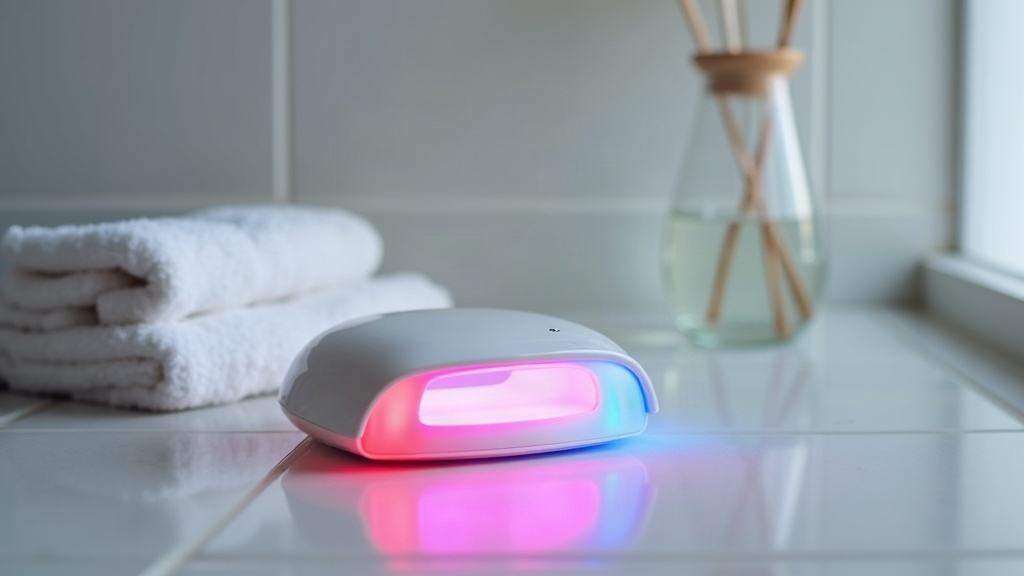
Generally, no. In-clinic devices used by dermatology practices tend to deliver light at a higher intensity and for a more precisely measured dose than home masks, which are built to a price point and to be safe for unsupervised use.
That safety margin is sensible — nobody wants a home device strong enough to cause harm without supervision — but it also means the at-home version is likely a gentler, slower cousin of what is used in a clinical setting. Reviews and product descriptions that imply a mask will do what an in-office treatment does are stretching the comparison.
What Can LED Realistically Do — and Not Do?
Used consistently over weeks, some people notice a reduction in redness or a general calmer look to their skin. It is reasonable to think of light therapy as a possible add-on to a routine, not as a stand-alone fix for acne that is inflamed, cystic, or leaving marks behind.
- It is not likely to do much for deep, painful, or cystic breakouts — those usually need a different conversation, including options covered on what treatments a doctor considers for persistent acne.
- It does not replace ingredients with a stronger evidence base for active acne, such as those discussed on what benzoyl peroxide actually does or what salicylic acid actually does.
- It will not do anything for scarring or dark marks left after a spot has healed — that is a separate process from active inflammation.
People sometimes reach for a light mask hoping it will do the work of several products at once, in the same way they might hope a “detox” product will — a comparison worth reading in are detox products doing anything for acne. Light therapy is not in that category of doing nothing, but it is also not a shortcut past everything else.
Are There Any Risks or Downsides?
For most people, LED masks used as directed are considered low-risk compared with active skincare ingredients — there is no acid, no peeling, no barrier disruption in the way a strong exfoliant or retinoid can cause. That said, a few things are worth being aware of:
- Eye protection matters. Bright light exposure close to the eyes over repeated sessions is a real consideration, and masks that come with eye protection built in exist for a reason.
- Skin that is already irritated, broken, or reacting to another product might not be the ideal moment to add a new device — the same logic behind introducing one product at a time applies here too.
- Some medications and skin conditions increase sensitivity to light. Anyone on a treatment that affects photosensitivity, including certain prescription options, is better off checking with the prescriber before adding a light device, rather than guessing.
None of this makes LED masks dangerous for most healthy skin. It just means “gentle” is not the same as “no considerations at all.”
Who Might Want to Skip It or See a Doctor Instead?
Light therapy is a reasonable thing to try for mild, non-severe acne, alongside a basic routine and some patience. It is not the right tool for acne that is painful, cystic, spreading, leaving scars, or affecting someone’s confidence and mood — those situations are worth raising with a doctor, and doing so early is a normal step, not an overreaction. More on recognising that point is covered in when acne is worth seeing a doctor about.
A dermatologist can also explain whether in-clinic light-based treatments make sense as part of a broader plan, and what a first visit generally involves is laid out in what happens at a first dermatology appointment for acne.
Is It Worth the Money?
That depends on expectations. As a low-risk, occasional add-on for someone with mild breakouts and a reasonable budget, an LED mask is unlikely to cause harm and might offer a modest improvement in redness or the odd inflamed spot over time. As a primary or only treatment for acne that is bothersome, widespread, or scarring, it is likely to disappoint — the evidence simply does not support that level of promise, however the marketing is worded.
It is worth thinking of light therapy the way one might think of a supporting player in a wider routine — alongside the basics covered in skincare routines and, where needed, options discussed in treatments and dermatology — rather than the headline act.
Acne Cut publishes general information about skin, not medical advice. We are writers and researchers, not dermatologists, doctors or pharmacists. Acne varies enormously from person to person, and what suits one person’s skin can irritate another’s. If your acne is painful, scarring, getting worse, or affecting how you feel day to day, speak to a doctor or a dermatologist — that is a normal thing to do and it is what they are there for.