Patch testing means applying a small amount of a new product to a limited area of skin — often the inner forearm or behind the ear — and waiting a few days to see if it causes redness, itching, stinging or breakouts before using it on the face. It’s a low-cost way to catch a bad reaction early.
Why bother patch testing at all?
Patch testing exists because skin can react to a product in ways that aren’t obvious from the ingredient list alone. Fragrance, preservatives, certain acids and some plant extracts can trigger irritation or allergic contact reactions in some people even when the same product is completely fine for someone else.
Applying a small amount somewhere less visible — and less consequential if things go wrong — means finding this out doesn’t cost a face full of redness or a flare of new spots. This matters most with active ingredients like retinoids, exfoliating acids, and benzoyl peroxide, but it’s worth doing with fragranced moisturisers and new sunscreens too.
How do you actually do a patch test?
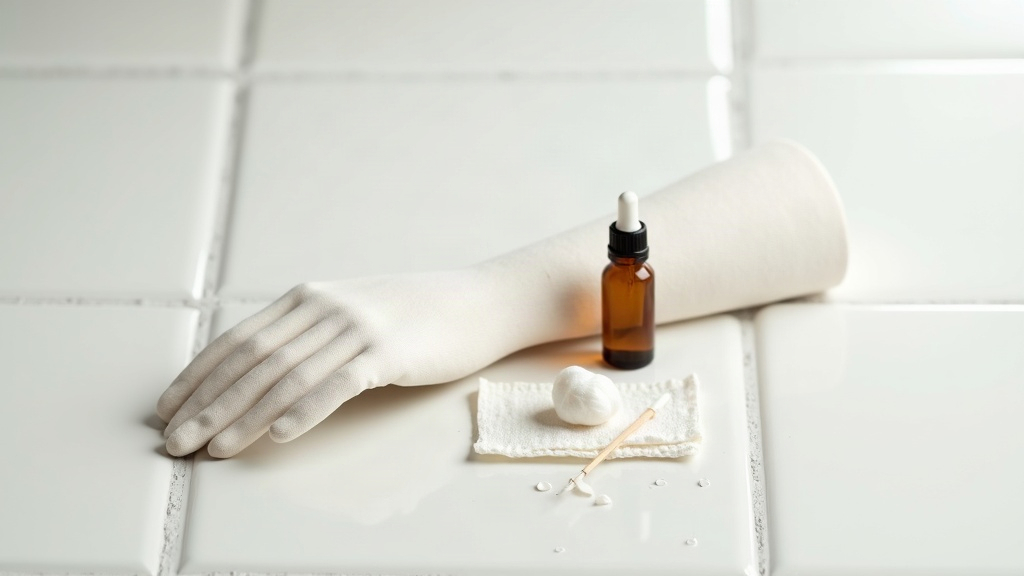
Apply a small amount of the product to a small area of skin — the inner forearm is a common choice — and leave it there, undisturbed, for 24 to 48 hours without washing it off, checking periodically for redness, itching, burning or bumps.
A simple version looks like this:
- Choose a patch of skin roughly the size of a coin, on the inner forearm or just behind the ear. These spots are easy to keep out of the way of clothing and washing.
- Apply a thin layer of the product to that patch only.
- Leave it alone. Don’t cover it with a plaster unless the product instructions say to, and don’t wash the area for at least 24 hours.
- Check the patch at several points over the next one to two days — straight after, a few hours later, and again the next morning.
- Look for redness, swelling, itching, stinging, small bumps, or anything that feels different from the surrounding skin.
If nothing has happened after 48 hours, that’s a reasonable sign the product is unlikely to cause an immediate reaction on the face. It doesn’t rule out a slower-building sensitivity, which is one reason to still introduce new products gradually.
What counts as a reaction worth stopping for?
Redness, itching, stinging, swelling, small bumps, or a rash on the patch-tested area are all reasons to stop using that product. Mild, brief tingling on the first application of a strong active is sometimes just how it feels, but anything that spreads, worsens, or lingers is a signal to stop.
It helps to know the difference between the two broad categories:
- Irritation — stinging, dryness, mild redness that tends to happen with anything strong (a strong acid or retinoid, for example) and often settles down or is manageable with less frequent use.
- Allergic reaction — itching, hives, swelling, or a rash that can appear even with gentle-sounding products and doesn’t depend on how “strong” an ingredient is.
Neither of these is something to push through on the face on the strength of a patch test alone. If a patch test produces a strong reaction — real swelling, blistering, spreading redness — that’s worth mentioning to a pharmacist or doctor, particularly if it doesn’t calm down within a day or two of stopping the product.
Does a clear patch test mean the product is safe for the face?
A clear patch test lowers the odds of an obvious, fast reaction, but it doesn’t guarantee the face will respond the same way, since facial skin is thinner, gets more sun exposure, and carries more active oil glands than the forearm.
This is why patch testing and introducing a product slowly on the face are two separate, complementary steps rather than one replacing the other. A patch test is about catching an allergic or strongly irritant reaction before it happens somewhere visible. Slow introduction on the face — a few times a week to start, one new product at a time — is about seeing how skin behaves with ongoing use, which is a different question. There’s more on why that one-at-a-time approach matters in why introducing one product at a time matters.
How long should a patch test actually run?
Most patch tests are checked over 24 to 48 hours, which is enough time to catch fast irritant or allergic reactions. Some slower-building sensitivities only show up after repeated use over one to two weeks, so a clear 48-hour patch test isn’t an absolute guarantee.
For that reason, some people patch test a product for a few days in a row rather than a single application, particularly with anything containing fragrance or a new acid. This is a bit more effort but gives a slightly fuller picture, especially for skin that’s reacted to things before.
Separately, judging whether a product is actually working — as opposed to whether it’s safe — takes much longer than a patch test ever will. That’s a different timeline covered in how long before you judge a new skincare product.
Which products are worth patch testing?
Anything new applied to the face is a reasonable candidate, but patch testing matters most for products with active ingredients — retinoids, exfoliating acids like AHAs and BHAs, benzoyl peroxide — and for anything with fragrance, essential oils, or a long ingredient list.
Lower-risk products, like a plain, fragrance-free moisturiser with a short ingredient list, carry less risk of surprise reactions, though patch testing them still costs nothing and can be worthwhile for anyone with a history of reactive skin.
It’s also worth thinking about where a product sits in a wider routine. A simple routine with fewer moving parts makes it easier to tell what’s actually causing a reaction if one shows up. There’s a practical outline of that kind of setup in what a simple acne routine actually looks like.
Does patch testing replace seeing a professional?
No. Patch testing is a home check for obvious irritation or allergy, not a substitute for a proper skin assessment, and it can’t tell anyone what’s causing ongoing acne, whether a product is suitable for a specific skin condition, or how a treatment plan should be built.
If skin reacts badly to several products in a row, if breakouts are painful, deep, or leaving marks, or if trying to manage things alone is starting to affect mood or confidence, a doctor or dermatologist is a sensible next step — not an overreaction, and not something to put off. Reactive, easily irritated skin can also be a sign the skin barrier needs a gentler approach generally, which is covered in what the skin barrier is and why it matters.
For a wider sense of how acne actually forms and what’s known and not known about it, the Acne Basics section is a reasonable starting point, and the Myths & Misinformation section is worth a look before trusting anything that sounds like a miracle fix picked up online.
What are common patch testing mistakes?
The most common mistakes are testing too small an amount to notice anything, checking only once instead of over a couple of days, and skipping the patch test entirely for a product that “sounds gentle” but contains fragrance or a new acid.
- Using too little product. A tiny, barely-there dab can make a mild reaction hard to spot. A thin but visible layer works better.
- Checking only immediately. Some reactions take several hours to show. A single glance right after application misses this.
- Patch testing on already-irritated skin. This can produce a false reaction that has nothing to do with the new product. A calm, unaffected patch of skin gives a clearer result.
- Skipping it for “natural” or fragrance-heavy products. Natural doesn’t mean gentle, and fragrance in particular is one of the more common causes of reactions on facial skin. A category-level look at this is in Skincare Routines.
Getting into the habit of a quick patch test before a new product touches the face is a small, unglamorous step, but it’s one of the few genuinely low-risk things anyone can do before spending money and time on a product that might not agree with their skin.
Acne Cut publishes general information about skin, not medical advice. We are writers and researchers, not dermatologists, doctors or pharmacists. Acne varies enormously from person to person, and what suits one person’s skin can irritate another’s. If your acne is painful, scarring, getting worse, or affecting how you feel day to day, speak to a doctor or a dermatologist — that is a normal thing to do and it is what they are there for.