Dairy has a plausible but not fully proven link to acne. Some research finds an association between milk — particularly skimmed milk — and breakouts in certain people, likely through its effect on hormones and insulin-like growth factor. It’s not a confirmed cause for everyone, and cutting dairy isn’t a guaranteed fix.
Is there actually a connection between dairy and acne?
There’s an observed association in some studies, but it isn’t the same as proof that dairy causes acne. Researchers have noticed that people who drink more milk, especially skimmed milk, sometimes report more breakouts than people who drink less. That’s a correlation, and correlations can have several explanations.
The honest summary is that the evidence is mixed. Some studies find a link, others find a weak one or none at all, and the studies themselves vary a lot in quality — many rely on people remembering and reporting their own diet, which is a notoriously imprecise way to gather data. Nothing here rises to the level of “dairy causes acne” as a blanket rule.
Why would milk affect skin in the first place?
The leading theory involves hormones naturally present in milk and a growth factor called IGF-1, both of which can influence oil production and skin cell turnover. More oil and faster cell shedding can contribute to clogged pores, which is one of the building blocks of acne.
Milk isn’t inert — it comes from a lactating animal and carries some of its hormonal signals along with it. IGF-1 in particular has been linked in some research to increased sebum production and changes in how skin cells behave inside a pore. If a pore is already prone to getting blocked, anything that nudges oil output up or shedding patterns off could plausibly make a bad pore-day slightly worse. That’s a mechanism, not a guarantee — plenty of people drink milk daily with no skin impact at all.
Does skimmed milk really matter more than whole milk?
Some studies have found a stronger association with skimmed or low-fat milk than with whole milk, which seems counterintuitive but may relate to how the fat and hormone content shift during processing. This is one of the more consistent findings, though it still isn’t settled science.
One possible explanation is that removing fat changes the ratio of hormone-related compounds relative to the rest of the milk, or that people who choose skimmed milk also differ in other dietary habits that get lumped in. Nobody has nailed down the exact mechanism. It’s worth knowing this pattern exists in the literature, but not worth treating as a firm rule to build a diet around.
What about cheese, yogurt and other dairy foods?
Cheese, yogurt and other dairy products have been studied far less than milk, and the current evidence doesn’t point to them having the same association. Fermentation changes the composition of dairy in ways that may matter, but there isn’t enough solid research to say cheese and yogurt behave the same as milk on skin.
This is genuinely an area where “we don’t know yet” is the accurate answer, not a way of dodging the question. If someone is looking at their own diet, treating liquid milk and fermented dairy as identical isn’t supported by what’s currently known.
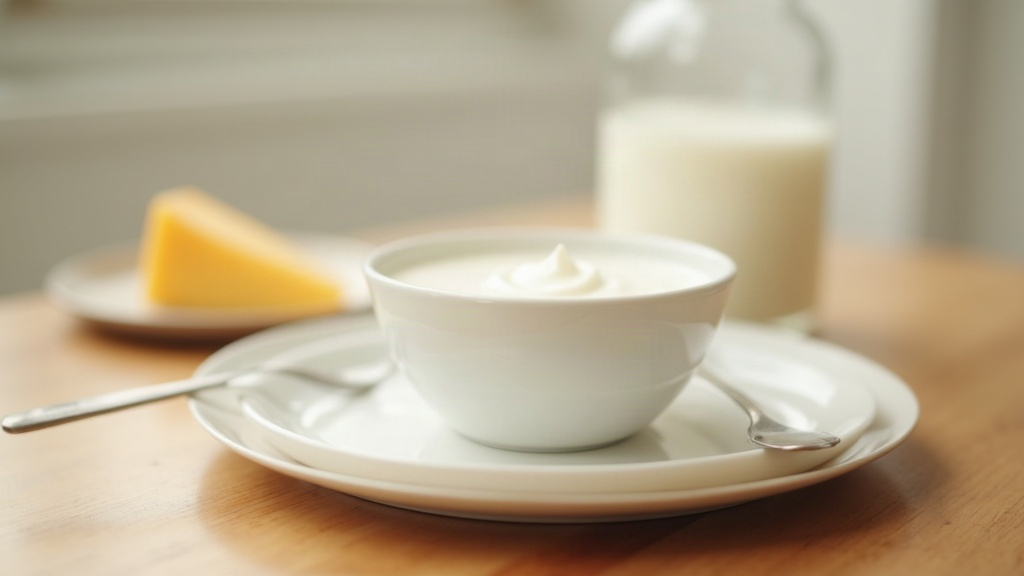
If someone cuts out dairy, will their skin clear up?
Not necessarily, and there’s no way to promise a result either way. Diet is one of several factors involved in acne, alongside genetics, hormones, skin cell behaviour and how a pore reacts to oil and bacteria — removing one input doesn’t switch off all the others.
Some people who cut back on milk notice a difference over time; many notice nothing at all. If someone wants to test this for themselves, it usually takes several weeks of consistent change to even start seeing a pattern, and skin fluctuates for lots of reasons unrelated to diet — stress, sleep, hormonal cycles, weather. Judging a dietary change fairly means giving it real time and not changing five things at once, the same logic used when introducing a new skincare product one at a time rather than several together, as explained in this piece on introducing one product at a time.
For a broader look at how diet and acne relate overall — not just dairy — the article on what the evidence actually says about diet and acne goes through the other foods that come up in this conversation, including sugar and high-glycaemic diets.
Is dairy the same kind of trigger as chocolate or sugar?
Not exactly. Dairy’s proposed link runs through hormones and growth factors, while high-glycaemic foods (those that spike blood sugar quickly) are thought to work through insulin and related hormonal pathways. Both are discussed in acne research, but they’re different mechanisms and neither is considered a primary cause on its own.
The chocolate question specifically gets asked a lot, and it’s worth separating from dairy — the two often get blamed together simply because a lot of chocolate contains milk. The article on whether chocolate causes acne covers that overlap in more detail.
Should someone just stop drinking milk to see what happens?
That’s a personal choice, not a medical instruction, and there’s nothing risky about trying it as long as overall nutrition stays balanced. What’s worth avoiding is treating it as a substitute for other things that are better supported, like a consistent gentle routine or seeing a professional about acne that isn’t improving.
Anyone with dietary restrictions, a medical condition, or concerns about calcium and other nutrients that dairy provides should think about the whole picture, not just skin. This is exactly the kind of question worth raising with a doctor or dietitian rather than making a permanent change based on one article — and it’s a good one to bring up at a dermatology appointment too, alongside the other things worth asking, covered in this guide to dermatology appointment questions.
What actually helps more than diet changes alone?
For most people, a simple and consistent skincare routine does more visible work than any single food swap, because it addresses the pore directly rather than an indirect hormonal pathway. That doesn’t mean diet is irrelevant — it means it’s rarely the whole story.
A reasonable starting point tends to include:
- A gentle cleanser used at a sensible frequency, not over-washing, as covered in how often acne-prone skin should be washed
- One active ingredient introduced at a time, patch-tested first, rather than several new products at once
- A moisturiser and sunscreen kept in the routine even when skin is oily or breaking out, since skipping them tends to cause more irritation, not less
The basics of ingredients like benzoyl peroxide, salicylic acid and adapalene are laid out plainly in the Ingredients Explained archive, and a full walk-through of a straightforward routine is in what a simple acne routine actually looks like.
When does this stop being a diet question?
If breakouts are painful, cystic, leaving marks, or affecting mood and confidence, that’s a signal to talk to a doctor or dermatologist rather than keep adjusting food alone. Seeking help early is a normal step, not an overreaction, and it opens up options that diet changes can’t replicate.
A doctor can look at the fuller picture — hormones, skin type, family history — and discuss options ranging from topical treatments to, where appropriate, things like hormonal treatment or oral antibiotics, all of which need medical supervision and monitoring. The article on when acne is worth seeing a doctor about gives a clearer sense of where that line usually sits, and the Treatments & Dermatology archive covers what a first appointment tends to involve.
Dairy is worth being curious about, especially milk and especially if breakouts seem to track alongside changes in diet. But it’s one thread in a much bigger picture, and no single food swap is a substitute for a routine that suits the skin in front of it, or for professional input when things aren’t settling on their own.
Acne Cut publishes general information about skin, not medical advice. We are writers and researchers, not dermatologists, doctors or pharmacists. Acne varies enormously from person to person, and what suits one person’s skin can irritate another’s. If your acne is painful, scarring, getting worse, or affecting how you feel day to day, speak to a doctor or a dermatologist — that is a normal thing to do and it is what they are there for.